
PARENTING WITH IMPACT PODCAST
Emotional Reactivity In Kids: Safety Matters More Than Willpower (podcast#242)
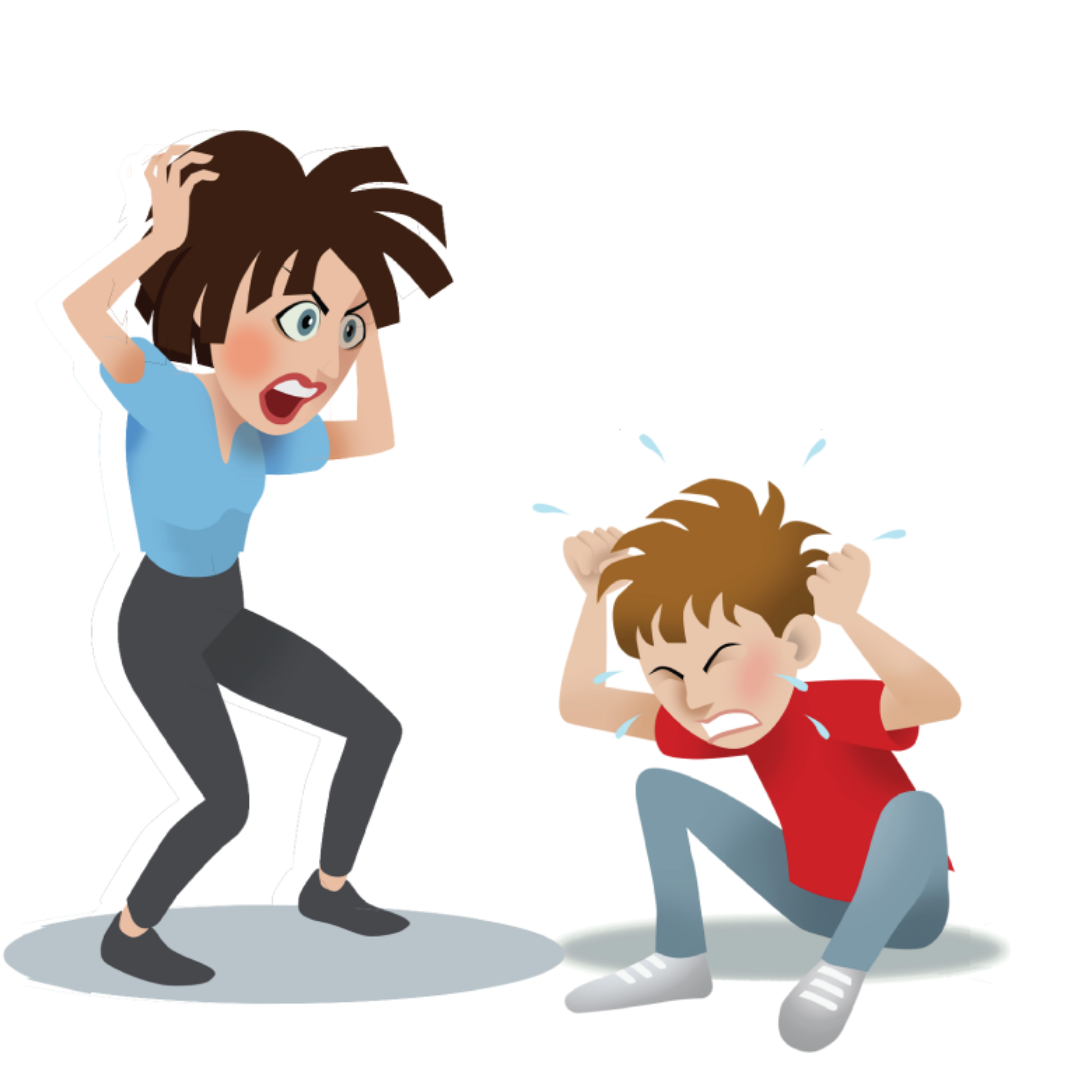
If you feel like someone in your home is always shutting down, melting down, or firing back, you’re not imagining it. Reactivity takes over fast, especially in stressed or neurodiverse families. In this episode, we’ll explain why it happens, how to spot each SODA pattern, and what to do in the moment to create safety and calm. Tune in to learn one shift that can lower stress for everyone in your home. Download a free tipsheet "Top 10 Ways to Stop Meltdowns in Their Tracks" to stop yelling and tantrums from everyone! Amazon Music | iHeart | Spotify | Apple Podcasts | TuneIn | Youtube Elaine Taylor-Klaus And I’m saying this specifically because I think that there’s an oversimplification that happens, and I think that the more we’ve learned about brain science and the more stressful our environment has become, the more we recognize that it’s not about willpower. That’s, that’s it. It’s like this sort of-it’s like we used to talk about ADHD as being about willpower. I think we used to talk about reactivity as being about willpower, and the more we learn about the brain and the body, it’s, it’s not actually that. And so that’s kind of where I wanna enter in. What’s your backstory on this one? Elaine Taylor-Klaus “Oh, here I’ve done something wrong. Here I’ve done something again, again, again.” And, and the other piece of it is, it’s also their own safety, right? So the other piece we’re fighting is that they, they think that they’re broken, right? So I’ve, I’m creating this story: I’m broken, I should be able to do this, I don’t understand why my brain doesn’t work the way all my friends do. And so there becomes this, I’m not even creating a safe space for myself because I’m constantly judging or beating myself up because I, you know, because I’m not meeting my-what I see as my-potential. Elaine Taylor-Klaus It’s this sort of-if you find a moment every day where everybody’s nervous system gets down to maybe a two or a three, maybe it’s sitting on the bed cuddling before you go to sleep. Maybe it’s rubbing somebody’s feet. Maybe it’s just, you know, oh, something to laugh at, right? Yeah. Let, let’s just enjoy the dinner ’cause it tastes so good. It’s just sort of, you know, what are the things that you can do to just kind of relish in a calm moment? Um, and finding that even once or twice a day-maybe it’s when you start, if it’s you, I’m gonna encourage you to try to do it when you start your day and when you end your day. It’ll help you sleep better, honestly, if you can do something, yeah, at the end of the day, you know, even if it’s just like giving yourself a hug or rubbing your arms or doing some deep breaths and some exhales and letting go of the day. Teaching our kids that part of what they need is moments of down-regulation is an important part of the toolbox. Elaine Taylor-Klaus Download a free tipsheet "Top 10 Ways to Stop Meltdowns in Their Tracks" to stop yelling and tantrums from everyone!
Article continues below...
Minimize Meltdowns!
What To Expect In Our Conversation
Emotional Reactivity In Kids: Safety Matters More Than Willpower
Find Parenting with Impact on your Favorite Player:
Related Links:
Our Discussion
Tuesday, the season, we’re gonna talk about reactivity, right?
Diane Dempster
This is Susan. We’re not sure whether we’re gonna talk about like being together with your family on the holidays ’cause we’re recording this kind of in preparation for a release during holidays in 2025, or whether we were just gonna end up talking about reactivity, because I think both of us had conversations with people this week that had just been about really reactive kids or teens or parents or whatever. So that’s kind of where this came up.
Elaine Taylor-Klaus
Well, and I just got back from a coaching conference, so there’s all kinds of stuff in my mind bouncing around about, you know, creating belonging and safety and all kinds of fun stuff. So we’re gonna kick it off with reactivity and, and how that shows up and then see where it goes.
Diane Dempster
You know, it’s funny ’cause even as she just said that, Elaine, one of the things I think I wanna start with is kind of our perspective as humans to reactivity, right? It’s this sort of-I think that there’s this idea, especially those of us who were raised in certain generations, that there was just some special magical button we can press on ourselves or we can get the other human to press that makes it so that they don’t react.
So I grew up in a home where reactivity was kind of not allowed, right? You weren’t-if there was any emotion at all, it wasn’t a rational discussion and you could-like, there was no rational discussion happening and the only thing that was valued was rational discussion. Right?
And so I think we’ve come a long way since then and, and really what, what I think I hear you saying is that we really need to look at: what is our relationship with, like, all kinds of emotions? Yeah. And, and when those emotions are, are in reaction to something else, right? Ultimately that’s what reactivity is, right?
So let’s say: what is reactivity? When we express an emotion or react to an emotion, I would say, um, maybe not intentionally or thoughtfully or, or consciously, but unconsciously from a-from a place of an emotion that may be…
Diane Dempster
Does that-an unconscious response to an emotion, typically that happens very quickly. This is like, I’ve heard people say that it’s like it takes you over kind of thing. And, um, one of the, the pieces that, that I think we have to start with is that reactivity looks different in everybody, right? It’s this sort of-reactivity, um, the acronym we use is SODA. What is SODA?
Elaine Taylor-Klaus
Yeah. Okay. But before we go into SODA, just really quickly, because this just in-
we’re talking about it as if it’s absolutely automatically a negative thing, but sometimes people have really positive reactions to things, right? You, you get a birthday party surprise, you’re gonna have a reaction to it. Somebody gives you a gift or shows up and, and you’re excited to see them. You see somebody you haven’t seen in a long time at a place you don’t expect to see them, and you kind of react to that.
Diane Dempster
Yeah. Right. And I think that that’s a nice way into it because it’s just sort of-you’re right, we do have this, this idea that it’s, it’s negative, but what I wanna take away from what you just said is that there’s this automatic piece of it, right? Yes. It’s this sort of-we always say that if we wanna be thoughtful in our responses, we wanna pause and then respond. And what we’re describing is something that happens not in the brain, but in the body and the heart, and the body mechanics, and the emotions, and that we may not even have time to think about it before it’s on us. And that’s why we call it a reaction in the brain.
Elaine Taylor-Klaus
But it’s not-it’s not a “ready, aim, fire.” It’s a fire.
Diane Dempster
Yes.
Elaine Taylor-Klaus
Oh yeah, right. And so sometimes that can be really positive and we can really enjoy that. Sometimes we get beautiful surprises at different times of the year, and that’s lovely. Um, and if you like surprises. And it’s if you like surprises.
Diane Dempster
Yeah. Oh, well, and I think that’s coming up for me-we’re gonna end up just like bumping around in this conversation, I can already tell, which is great. The relationship between being a neuro-spicy human, mm-hmm, and being emotion-so your emotions might be quicker to respond. They might be more heightened. They might be-I mean, so you might be more sensitive, you might be less sensitive. But so there’s gonna be an amplification that happens, whether it’s because your kid has ADHD or with anxiety or depression or anything, you’re gonna have some of that underneath it.
Elaine Taylor-Klaus
Yeah. I, I used to say in, in my house, the highs were higher and the lows were lower. Right. And there was a lot less in between. And I think we see that in families with neurodiversity where there is, there’s sometimes a lot of reactivity, sometimes a fair amount of intensity. Right. Um, okay, so now I’m, I’m ready, if you are, to go into how SODA shows up-how does it show up when it’s a reaction that we may not find favorable in our families? It, it can show up in what we call SODA. Right? What’s SODA?
Diane Dempster
Oh, I thought you were gonna explain it. You know the acronym? I can’t-yeah, do it.
Elaine Taylor-Klaus
Okay. So SODA is an acronym. Um, the S stands for Shut Down. So sometimes people react by shutting down. Um, the O is go on the Offense, the D is Defense, and the A is Avoid. So that’s-let me put it out there first.
Diane Dempster
Yeah. And it’s kind of like fight or flight, right? So the S and the A are flight, and the O and the D are fight. Right? So either I’m defensive or offensive and that’s the way I’m fighting, or I’m shutting down or I’m avoiding and that’s my flight. Is that-
Elaine Taylor-Klaus
Yeah, I think that’s, that’s fair. Or maybe freeze-shut down could be freeze.
Diane Dempster
Yeah. Freeze could be freeze.
Elaine Taylor-Klaus
Yeah. So-but SODA is, I think, a helpful lens that we can use when we see behaviors. And sometimes we don’t realize that our kids are being reactive because they’re not yelling or fighting or screaming or slamming doors.
Diane Dempster
Right. They’re blaming or they’re hiding in their room, which doesn’t quite feel the same and could still be a reaction. Right. I was just thinking about the defense, right? It’s this sort of-the blame game, and we could do a whole podcast on the blame game, but parents all the time are like, “My kid won’t take responsibility for what’s going on.” And to me, that’s the great indication that this kid is escalated. This kid is in a reactive response. And yes, there requires a level of maturity to take responsibility-we’re not talking about that piece of it-but if you notice your kid blaming everybody else, the teacher, the-the dog ate my homework, whatever it is, there’s some possibility that that’s because they’re in the D of SODA and they’re reactive, and-
Elaine Taylor-Klaus
And the blame game also happens in offense, right? Mm-hmm. Like, “It’s because the teacher didn’t prepare me. It’s because you didn’t remind me. It’s because you didn’t get me up.” Right? There’s-both offense and defense can, can lead into that blaming game, and the blame is because it’s really hard to feel like-or want or be able-to take responsibility myself. So if somebody else is responsible, then I’m not wrong, I’m not bad. Right. And there’s a conflating for a lot of our kids of wrong equals bad, which is probably another conversation as well. Maybe not-maybe it’s this conversation.
Diane Dempster
Well, do we wanna take a break and then come back?
Elaine Taylor-Klaus
Yeah.
Diane Dempster
Where are we gonna go?
Elaine Taylor-Klaus
Yeah. Well actually, before we do that-one thing, because what I wanna cue up… what I just said really hit something for me-is that notion that wrong equals bad, right? Makes a lot of our kids, and sometimes us or our spouses or our partners, feel like it’s not safe to be ourself. And so that’s-I wanna come back and talk a little bit about safety. Can we do that?
Diane Dempster
Let’s do that.
Elaine Taylor-Klaus
It’s Elaine and Diane, and we are talking about reactivity. We’ve been talking about emotional intensity and SODA and that tendency-whether it’s a positive reaction or a negative reaction-but really we’re kind of moving into what happens when we have reactions in the home that aren’t serving the family dynamic.
Diane Dempster
Right. Well, and part of where I wanna go about this-before, “wrong was bad,” right? Or I don’t remember what the language was that you used-but it’s, there’s so much to this that is automatic. Right? And we don’t wanna make that an excuse necessarily. We, we can talk a bit about kind of what to do about it, but if we, if we see reactivity as something that somebody’s doing on purpose or that they can somehow control, we’re gonna handle it very differently than if we go, “Okay, wait. This person is having something going on in their brain and their body that is more automatic.” And so how do you accommodate rather than-so there’s two parts. It’s like: what’s going on, which is where you were gonna talk about the safety piece of it, and then there’s the how-do-you-accommodate-it piece. So let’s talk about-do you wanna start with the safety?
Elaine Taylor-Klaus
Yeah, I mean-and part of, as we were talking about what do we wanna talk about today-you know, I mentioned I just came back from this conference, from a coaching conference, and it was kind of striking to me, Diane, how many of the presentations I went to and the conversations I attended were talking about how essential safety is. Safety for creating a sense of belonging and for people to be available-specifically available-for growth. That was the particular place that there was a lot of focus because it was coaching. And, and this notion-and I, at some point I captured in my notes like, “Is this what’s going on with our kids?” Because when, when our kids don’t feel like we see them for who they are or accept them for who they are, even if they’re not performing at a certain level-whatever, whether that’s academic performance or, you know, making their bed or, you know, getting along with their sibling-if they don’t feel like we allow them to be who they are, then we run the risk of them feeling unsafe. And that unsafety can actually shut down their capacity to learn. It’s exactly the very thing we want them to learn, to be able to manage.
Diane Dempster
It’s like, you know-well, and what’s coming up for me as you’re saying that, it’s kind of like two different things. One is that it’s, it’s hard because as parents we work so hard to create safety. And you, you were talking earlier about a parent who really wanted to make some change and to send a message that the relationship was more important than the grades. I am shortcutting the conversation, but it’s a sort of-and if, if you’ve had years, months, years, in most instances, of our kids feeling like, you know, you, you know, every, every time we have a conversation, it’s about all the things that I’ve done wrong, or every time we have a conversation, it’s about one more thing that I’m supposed to do. We get into this ha-not habit-there’s a neuroplasticity that’s created in our kids that they feel like no matter what we say, they’re hearing that as judgment.
Yeah, no, I think that’s very true. And either way-whether it’s external or internal, or whether we’re, we’re kind of taking other people’s reactions or behaviors and then making up stories about what that means for us-the bottom line, and I think this is what I, I really hope parents will take away from this no matter what, is when any human, and that means us as parents or our kids, when we don’t feel like it’s, it’s okay to be who we are-when we have to mask who we are, when it doesn’t feel like being who I am is safe or is gonna be met with, um, respect… One of the presenters I went to hear wrote a book on neurodiversity and coaching, and she was talking a lot about dignity and how important it is for, for us to create environments that are dignified and inclusive, um, and flexible. And-but that language of dignity around being who I am and letting that be okay and not having to morph or change or fit into someone else’s box, yeah, is something I think a lot of our kids struggle with. And I don’t think we intend to have them feel like they can’t be themselves, but that’s the result of being in a, in a school system where they’re constantly being expected to be in somebody’s box.
Diane Dempster
Right. Well, and it, and it’s interesting because I think that that word “safety,” where we started, I think it feels like-just even in my nervous system-it’s like, “Oh my gosh, I’m not creating a safe space for my child.” Like there’s this sort of layer of ugh that goes along with that word safety. Yet it’s really true, because the nervous system doesn’t feel safety. If we can move it to something more like dignity or respect, ease-even like “my nervous system doesn’t feel at ease” is very different than “my nervous system doesn’t feel safe.” And maybe that’s, that could be helpful as we’re looking at this because that word safe does have this charge to it. Technically, that’s actually what’s going on in the brain and the body, right? The body, the body sees what’s going on as a threat-whether it’s a legitimate threat or whether it’s a theoretical threat. It doesn’t matter. Doesn’t matter. Brain and body see it as a threat. I remember when I learned this the first time: it’s like the brain and the body see a missing assignment the same way that it sees a mountain lion chasing them. I mean, it’s just like literally-it’s a flash on or a flash off, and it’s just, “This is not… this is a threat to me.”
Elaine Taylor-Klaus
So I just found something in my notes, and you’re gonna love this. So one of the things she talked about-it’s a woman named Lynn Miller P-Lova. One of the things she talks about was, um, that like sensitivity in itself is not the problem. It’s the toxicity around it that’s the problem. She talked about people with neurodiversity as being canaries in the coal mine and that we, we experience these feelings more intensely, often more quickly. And it’s really important because the world needs people who feel this way and experience the world this way, but we have to create an environment where they don’t feel like they have to mask harder. We wanna create a way for them to, to play to their strengths. Um, and so I just thought that was really powerful-that notion that, that it’s not try, it’s not, don’t do this or don’t react or don’t feel this way. It’s how do we create a space for you to feel safe feeling this way.
Diane Dempster
I think that that’s really where I feel like we need to go with the time we have left, is like we-I think that, you know, to bottom-line-we get that this is automatic. It has lots of different flavors. What’s going on underneath it is the, the brain and the body has a sense of, of ill-ease or threat or not feeling safe. And so I think that that first important thing is to recognize when you have a reactive kid, whatever flavor it is, or if you are in a place of reactive, there’s this need to normalize it. And I think that that’s the piece of it-to start with: this happens to literally everybody on the planet. It looks different on every-to everybody on the planet, but this is what’s happening in the brain and the body. So that’s the what. Do we-so what do we do about that? What’s important to focus on?
Elaine Taylor-Klaus
So, and that’s, that’s what’s coming up for me is one, is to recognize that this creates a sense of stress in the body if we’re constantly in reactive mode. And so, you know, we talk about this a lot in our programs and in Sanity School and the anatomy of the trigger, and like we spend a lot of focus talking about how do you handle feeling stressed because chronic stress creates-is eventually gonna lead to burnout, whether it’s with us as parents or with teachers or with our kids. We can actually do something about that when we recognize it and we inter-intervene. The tool that she taught that I thought was so cool is she said, we gotta stop talking about the Golden Rule-do unto others as we would have them do unto us. And she introduced the notion of the Platinum Rule, which was: treat others how they want to be treated. I really love that notion that one of the things we do about it is we tune into what someone else’s experience is. If our kid’s slamming a door or avoiding or shutting down or any of those SODAs, what, what are they seeking? What-how do they want to be engaged with? How do they wanna be treated?
Diane Dempster
And when you say that, immediately it’s like this sort of-we want our kids to tell us what to do. So it’s like, “Okay, we get it,” but it’s like, so when you slam the door, what am I supposed to do? And then their kid is gonna say, “Well, I dunno,” right? So-but an invitation. So the time to talk about what they need is not when they’re slamming the door or they’re reacting or they’re in the middle of SODA. So that’s the other piece we need to start with is this sort of-the conversations about reactivity happen in the moment that you’re not reactive. And what you were saying earlier that I think is important to highlight-these kids are wimping around at a stress level of a six or a seven. They, they don’t have a lot of moments where their nervous system is calm. Yeah. And so that could be part of what the toolbox is as well-is, I was talking about this on a group the other day.
And ultimately, like we want to be able to be that person to go co-regulate for our kids to help be the one that helps them down-regulate. I was, I was watching some movie on the plane coming back from this conference. And you know, it had nothing to do with the movie, but there’s this one scene where, where this young adult is kind of hyperventilating and having a panic attack and somebody, she pulls over and the guy comes up to the window and starts yelling at her, and then he realizes she’s having a panic attack and he is. I started crying. Really? ‘Cause he immediately goes, oh wait a minute. You’re okay. There’s nothing wrong. My son used to have these and this complete stranger starts breathing with her and helping her reclaim and calm down and down regulate. And he does this 5, 4, 3, 2. Like he does the whole thing. ‘Cause his son had had panic attacks.
Diane Dempster
That’s so cool. It was beautiful. And then every-if every police officer did that when they pulled you, before I tell you what you did wrong-down regulate, regulate.
Elaine Taylor-Klaus
See them sitting and eating a sandwich and whatever. It was just, but I was literally crying because what he did was so beautiful. ‘Cause he saw that she was stressed and instead of saying, you can’t turn here, you can’t park here, he went. Oh, you are struggling. Let me help you calm down first and then we can talk.
Diane Dempster
Well, and as parents, I mean, so often we, yeah, no, I know. And we talk about the hot mess because somebody gets reactive and then we get reactive and then they get reactive and like escalating and it requires somebody like breaking that cycle and being able to go, oh wait, let me not react to their reaction. Let me, let me co-regulate. Right? And, and so it requires, and the thing that I always say is like, whoever can be the grownup in the room gets to be the girl, right? And so sometimes it’s a kid will say, mommy, let’s, let’s, like, everybody’s upset. Let’s calm down. Like hopefully it’s mom or daddy that’s saying, Hey, everybody’s upset. Let’s calm down. Um, let’s take a minute. Let’s take a beat. But it’s that sort of, yeah. Again, we’ve gotta figure out how to not get ourselves worked up in order to be there for them when they’re reacting.
Elaine Taylor-Klaus
Well and to recognize that their behaviors are often reactions.
Diane Dempster
Yes.
Elaine Taylor-Klaus
Right. Their behaviors are often autonomic responses, reactions, and they need support in downregulating, and that that’s not the moment to try to logic them out of it.
Diane Dempster
And I think that that’s the piece of it, is that I always think about it as, um, you know, something, I try to think of reactivity in the same breath. It’s something that just happens automatically in a body. And I, and I don’t wanna oversimplify seizures, but that’s the first thing that kind of pops to my mind. It’s like, if you’ve got a human that’s in the midst of a seizure, you’re going to respond very differently. And if you can see that this is a human in in the middle of a reactive, yeah, a reactive space. It’s this sort of, okay, wait, what is this? What is this human need? Almost in that same sort of way, and I, again, I don’t wanna oversimplify what happens when a human has a seizure, but I think it’s helpful.
Elaine Taylor-Klaus
Well it is and, and I’m gonna tell a story on myself. ‘Cause David and I were dealing with this tech thing this morning and both of us kinda lost it. And I tried to do this by saying, okay, it feels like we both need to just take a breath and down regulate-telling someone to calm down does not help them calm down. And I am very guilty of having tried that this morning. Um, and so I had to stop talking and I had to just kind of be that downregulating without trying to verbalize it. Um, so that we could both kind of reclaim and come back to dealing with it. ‘Cause it wasn’t a big deal, but we were both triggered by it.
Diane Dempster
Well, and what you’re speaking to is that there may need to be some experimentation, but I think that that’s part of the important part of what we wanna get out here, is that this is something to work on as a family. This is something to create a space so that it becomes normalized and it might require trying a few different things. I remember when my kids were little. If, you know, they’d storm off to their room and slam the door. One of them wanted me to follow them, and the other one absolutely didn’t want me to not, and so I had to remember, okay, wait, which, which kid is this? Okay, no, I’m gonna just sit outside their door and wait for them, or I’m gonna knock quietly and I’m gonna go in and give them a hug. Right. It’s just sort of knowing what the medicine is that they most need or, and even if they can’t articulate it, trying different things. And above all, managing your own reactivity in the midst of it feels what? Like what’s important here?
Elaine Taylor-Klaus
The bottom line I think that I’m taking away is, you said something a little while ago, is this is a family affair, right? We’re all dealing with this. We’re all human. We all have different thresholds of reactivity, but to normalize that reactivity happens and to own when we do. So that even if you’re not a major reactor, right, even if you’re not a major yeller, to own it so that it’s normalized that this is human and this is something we humans all have to learn to manage instead of they’re the ones with a behavior and we expect them to figure it out. So that’s the role we can play in this. You know, we talk a lot about making it okay to make mistakes, right? So this is making it okay to have emotions. We, we wrote a, I wrote a piece years ago about how emotions need their time on the surface. The question is how they show up on the surface. And sometimes we might need to massage that a little bit.
Diane Dempster
Awesome. Awesome. So I’ve got a, you, I dunno if y’all can hear this, but I’ve got a really reactive dog listening to us talk about reactivity. So let’s wrap up the podcast so I can go help him co-regulate.
Elaine Taylor-Klaus
There you go. Alright, so everybody take a minute. Think about what you thinking about during this conversation. While Diane and I have been talking and, and exploring and ideating and, you know, come over some challenges and some resolutions. Like, what had your attention and what’s an insight for you? What are you taking away from this conversation?
Diane Dempster
As always, thanks for what you’re doing for yourself and for your kids. At the end of the day, you really do make a difference. Great week, everybody.Minimize Meltdowns!

Find Parenting with Impact on your Favorite Player:
Amazon Music | iHeart | Spotify | Apple Podcasts | TuneIn | Youtube